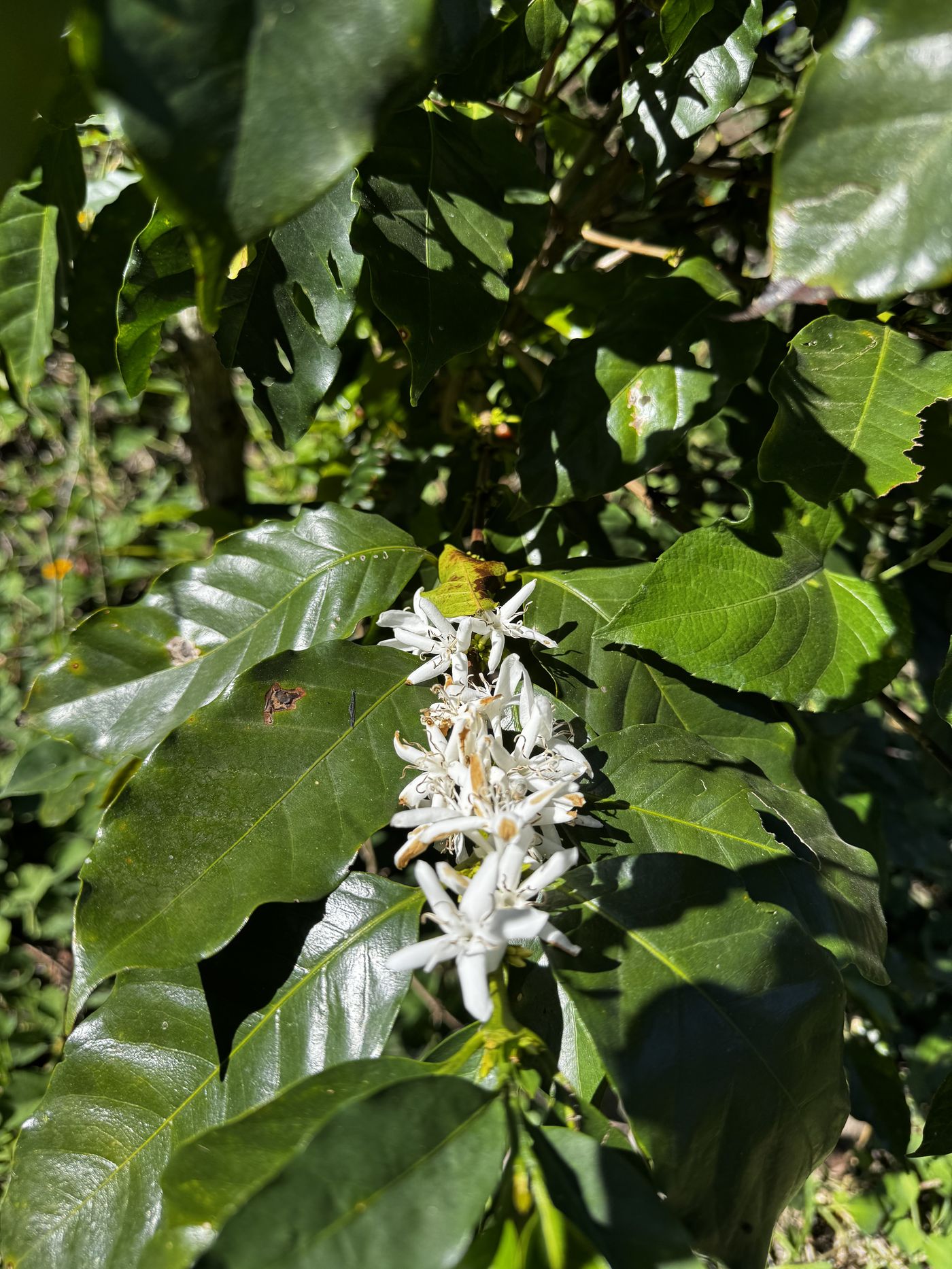
The blossom
After the first rains, white blossoms open along every branch and perfume the tablones for a few short days. Each flower is one future cherry.
Est. 1872 · Quezaltepeque, El Salvador
Finca Colombia is a working family estate on the slopes of the San Salvador volcano, where every cherry has been picked by hand, sorted in the field, and carried out the same way for more than 150 years.
Shade grown. Hand picked. Since 1872. A physician from Medellín planted coffee on these slopes and named the farm after the country he left behind. One volcanic eruption and a century and a half later, the same land is still in coffee, and the harvest still moves by hand.
Our Story
Finca Colombia sits in Quezaltepeque, La Libertad, on the northern slopes of the San Salvador volcano, where the coffee grows at 1,000 metres above the sea, climbing toward the crater of El Boquerón. The farm was founded within the coffee lands assembled by Dr. Emilio Álvarez Lalinde, a physician from Medellín who arrived in El Salvador in 1872 and is remembered as the father of Salvadoran surgery.
Homesick for Antioquia, the family wrote their old country across the new landscape: farms named Colombia, Antioquía, Bolívar and Miranda, and a river renamed Río Claro because it reminded them of Manizales. This farm keeps the name, and the family keeps the farm: seventy manzanas, about 49 hectares, in sixteen tablones, still part of the wider Álvarez lands and still worked alongside their descendants.
Walk through 150 yearsSince 1872
Dr. Emilio Álvarez Lalinde, a young physician from Medellín, lands in El Salvador. Within two decades he assembles more than 2,000 hectares of coffee land in Quezaltepeque, among them a farm he names Colombia, after the country he left behind.
His brother Rafael arrives from Manizales after a month of travel by cart, river and sea, and takes over the running of Colombia and Santa Isabel. That August his daughter María is born at the finca.
The brothers install El Salvador's first water-powered coffee depulper, pioneering wet processing in the country. Within a few years, machines wash, dry and pack coffee for export across the family's farms.
On the night of Corpus Christi, the San Salvador volcano erupts. Earthquakes level houses in Quezaltepeque and lava freezes into the rock fields of El Playón, minutes from the farm gates. The finca endures.
María Álvarez de Guillén, born on this farm, publishes La Hija de Casa, the first novel published by a woman in El Salvador. A suffragist and founding member of the Inter-American Commission of Women, she keeps working in coffee all her life and later publishes a book of poems called El pregón del café.
The same land is still in coffee. New seedlings go into the ground every year, the soil is studied plot by plot, and each harvest still moves by hand through the farm's sixteen tablones.
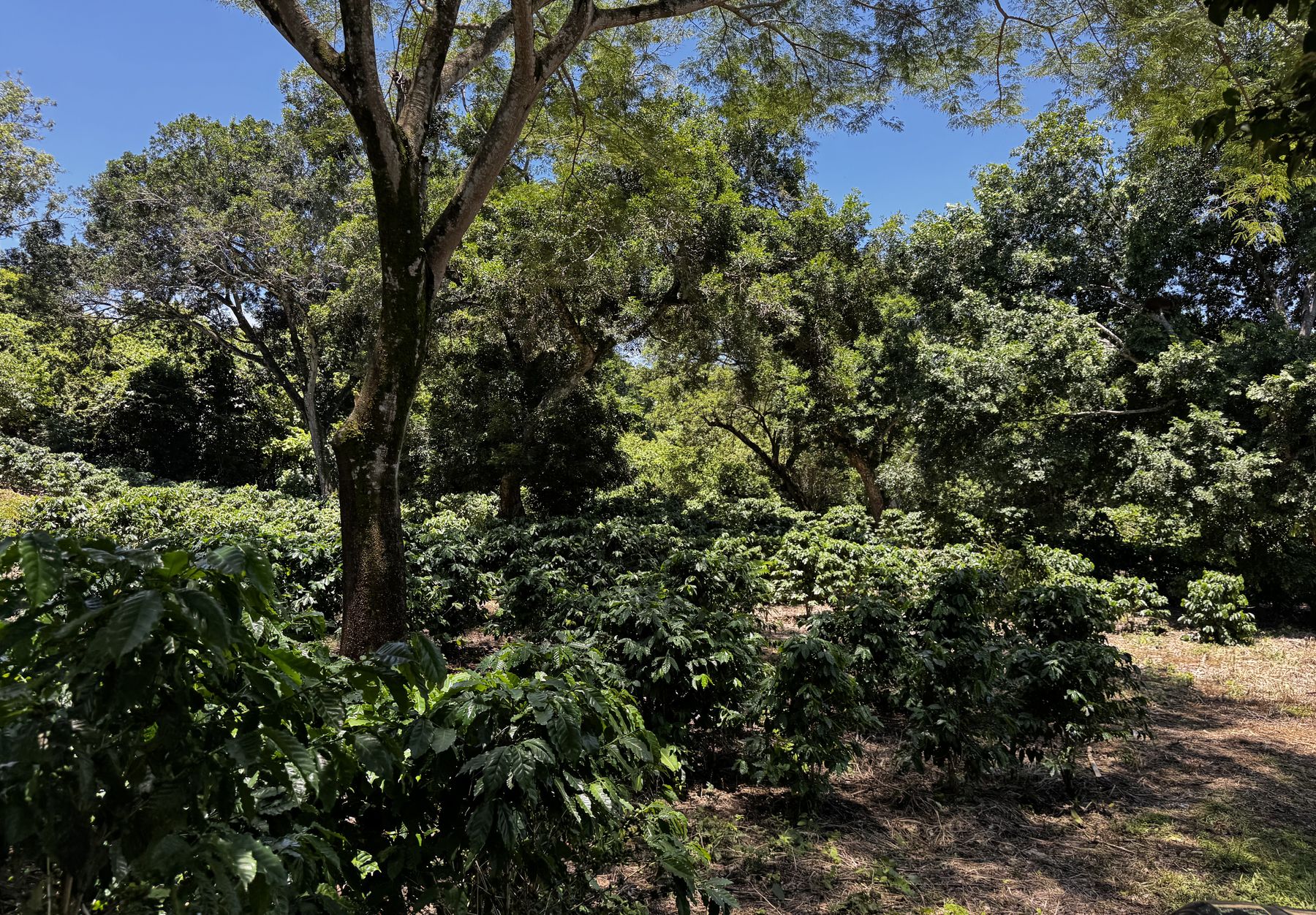
Under the canopy
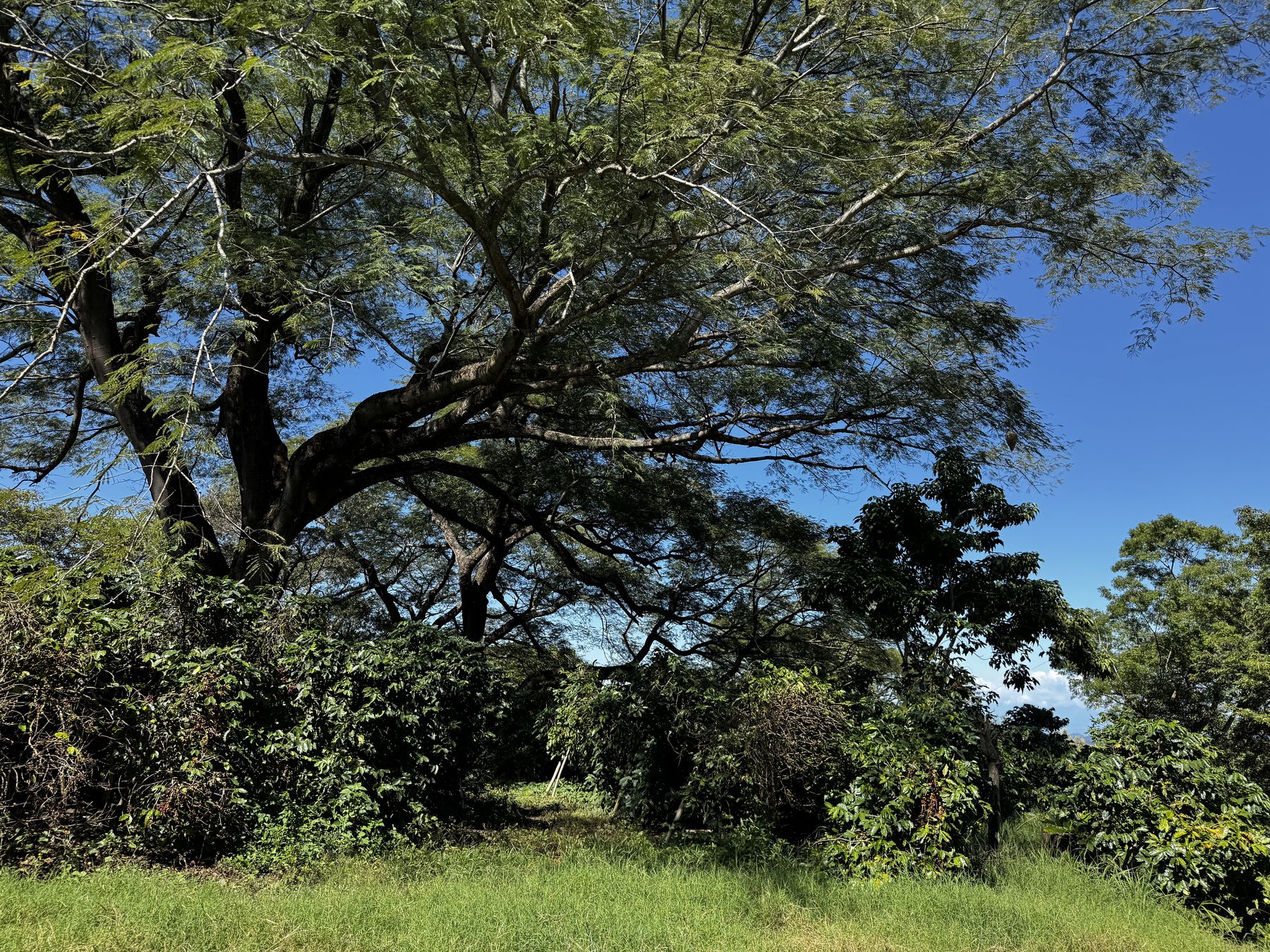
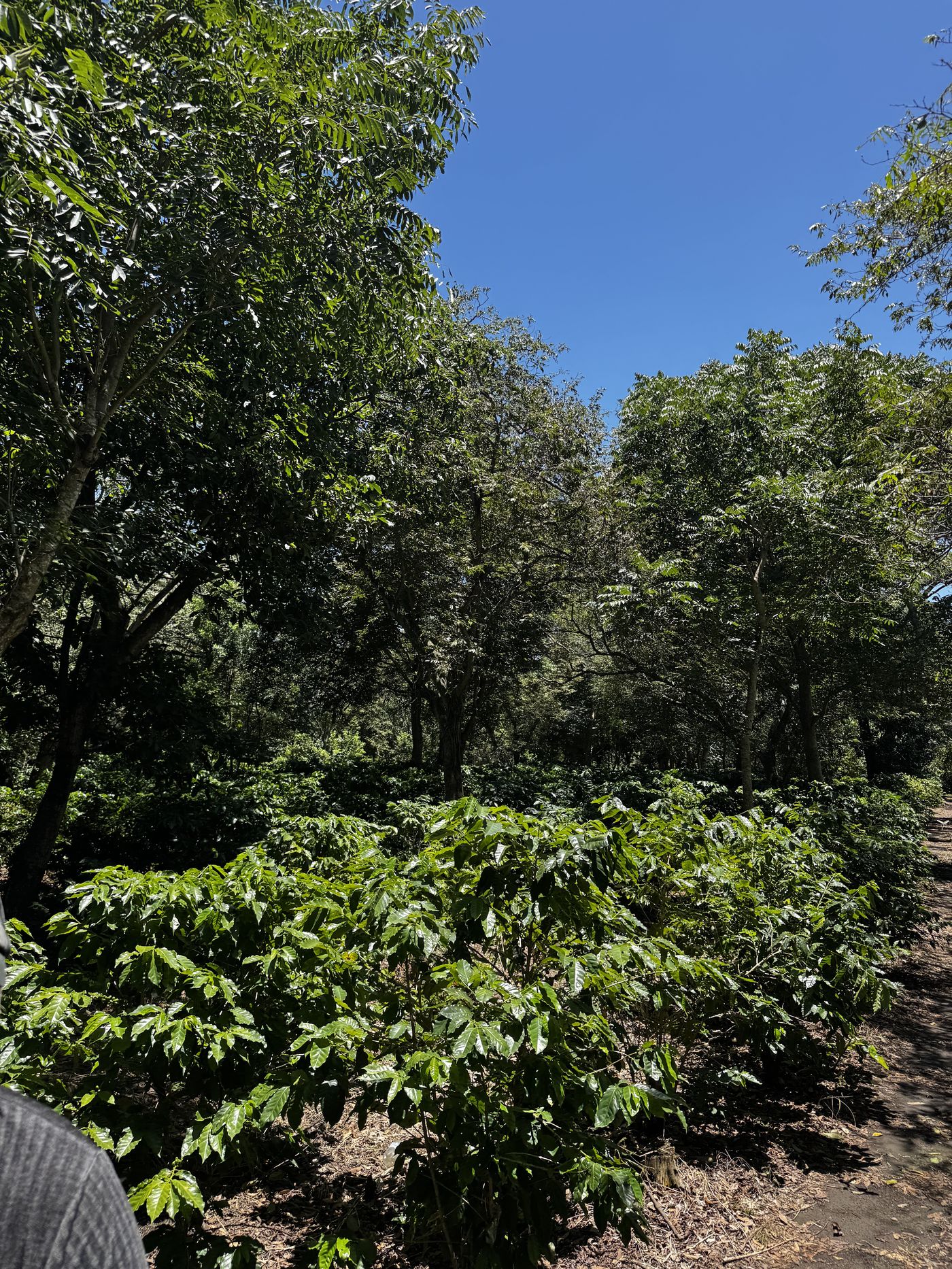
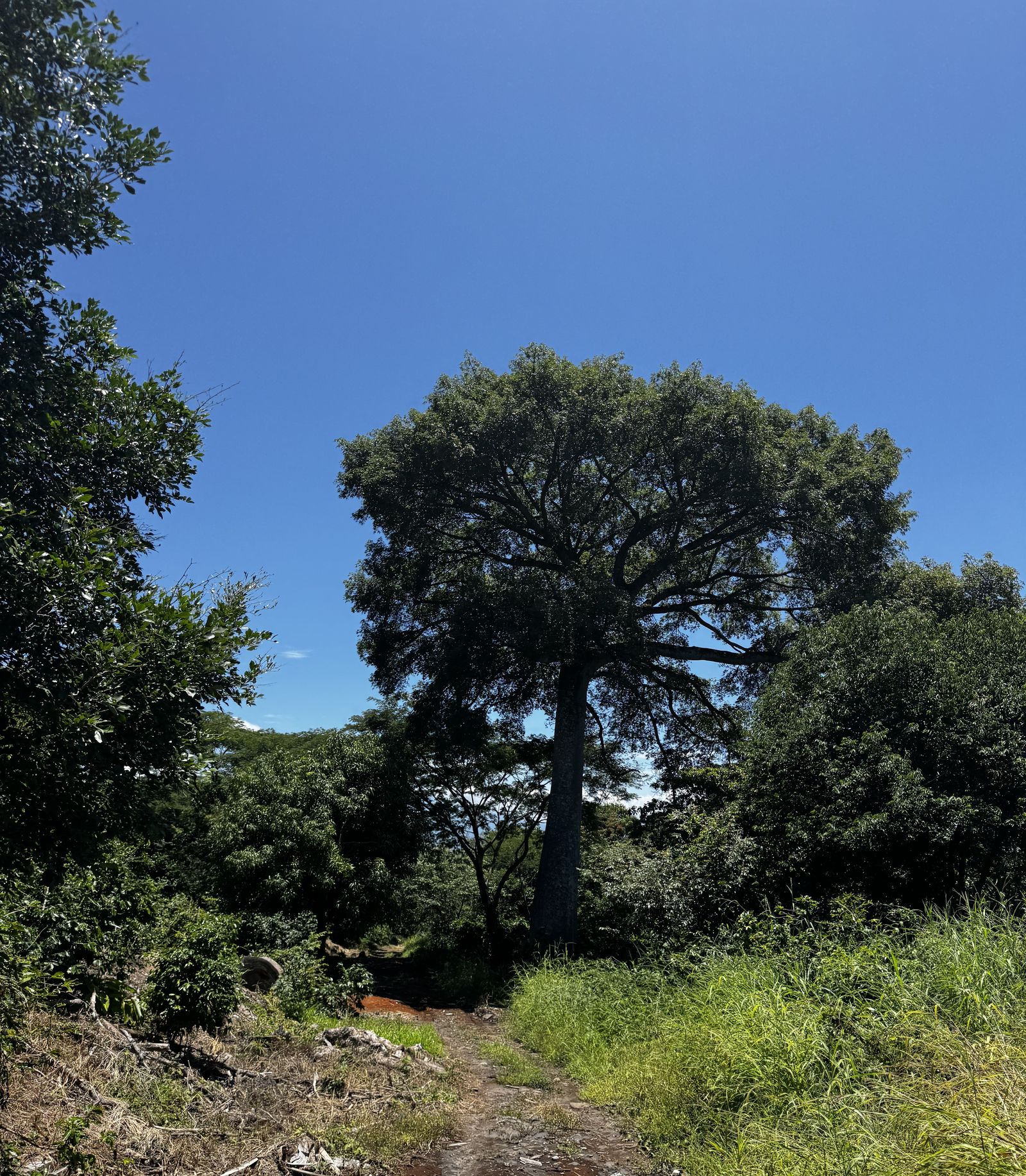
Our coffee ripens slowly beneath a living canopy that shelters birds, builds soil, and deepens the cup. Some of these shade trees have stood over the tablones longer than anyone can remember.
The Coffee
Every lot follows the same slow road: white blossoms in the dry season, deep red cherries at harvest, and dense green beans ready for the roaster.
After the first rains, white blossoms open along every branch and perfume the tablones for a few short days. Each flower is one future cherry.
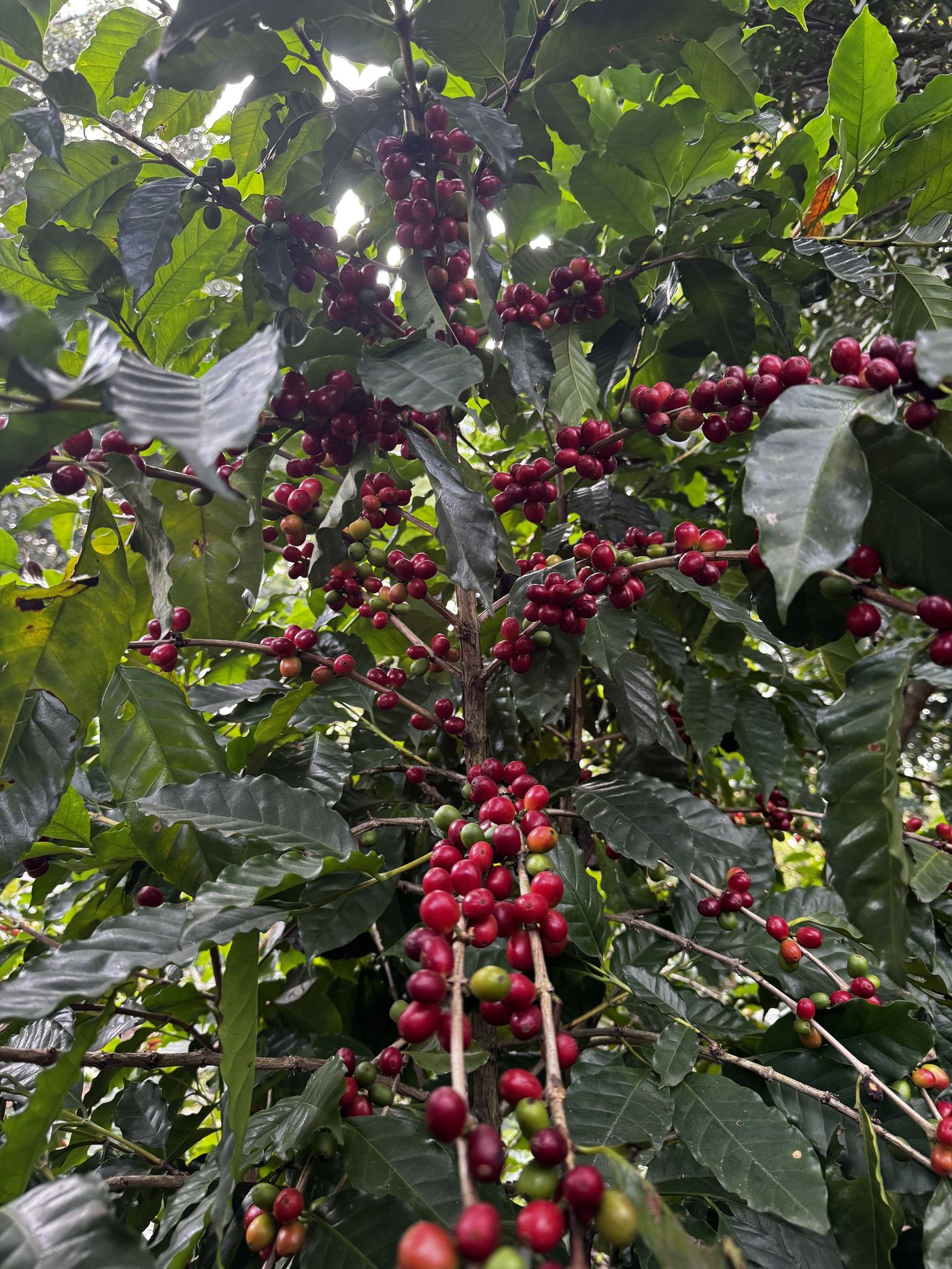
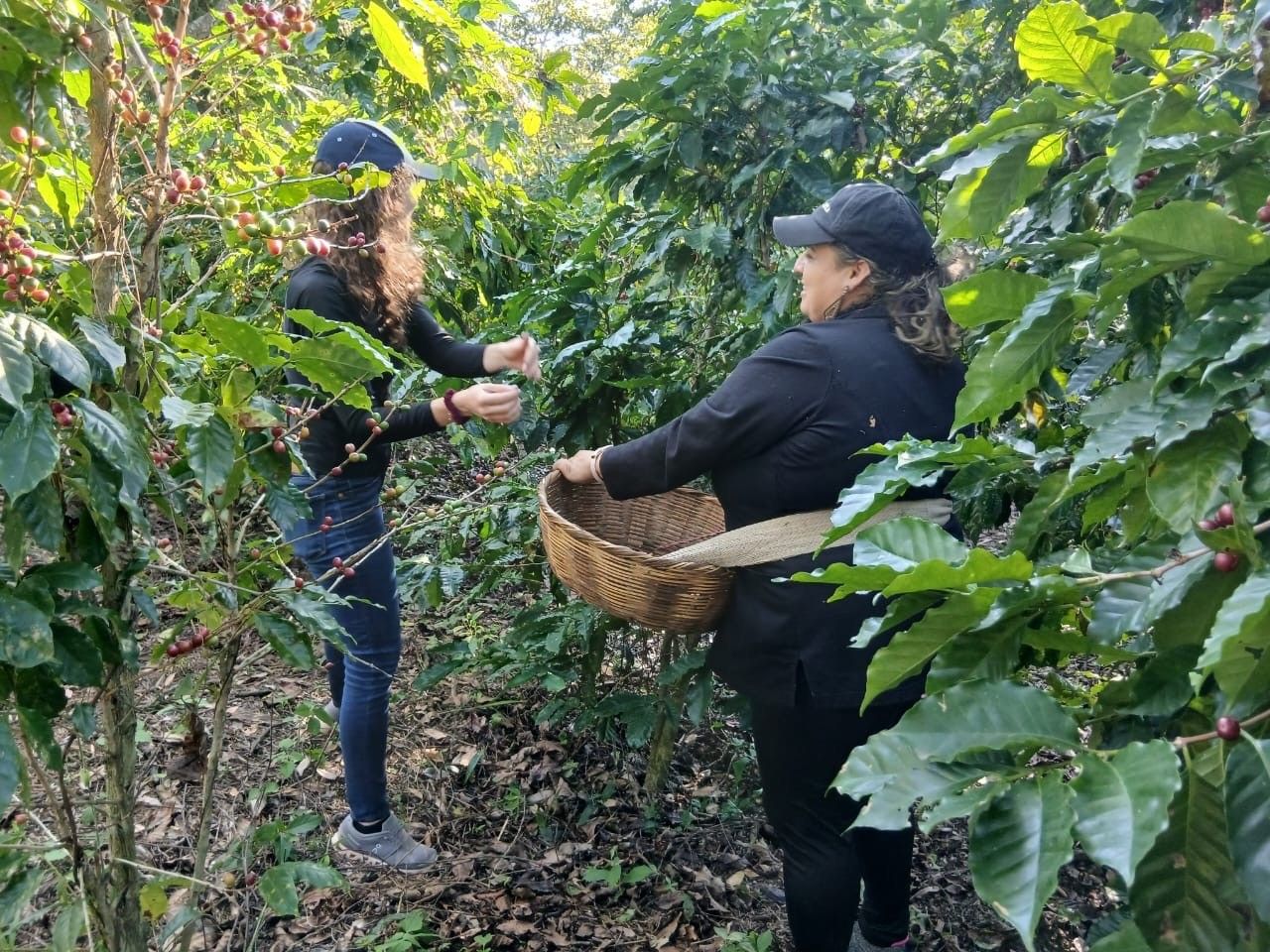
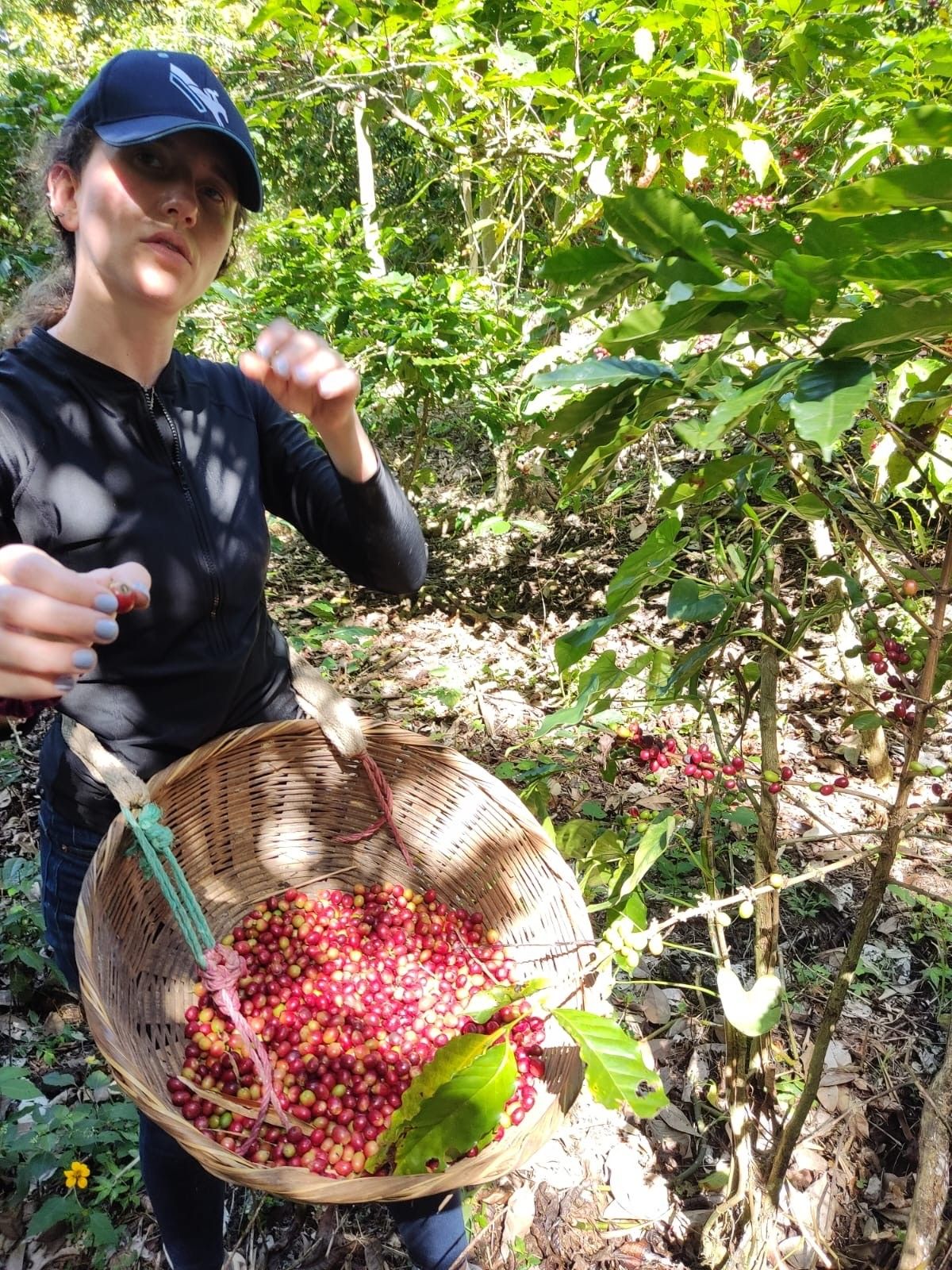
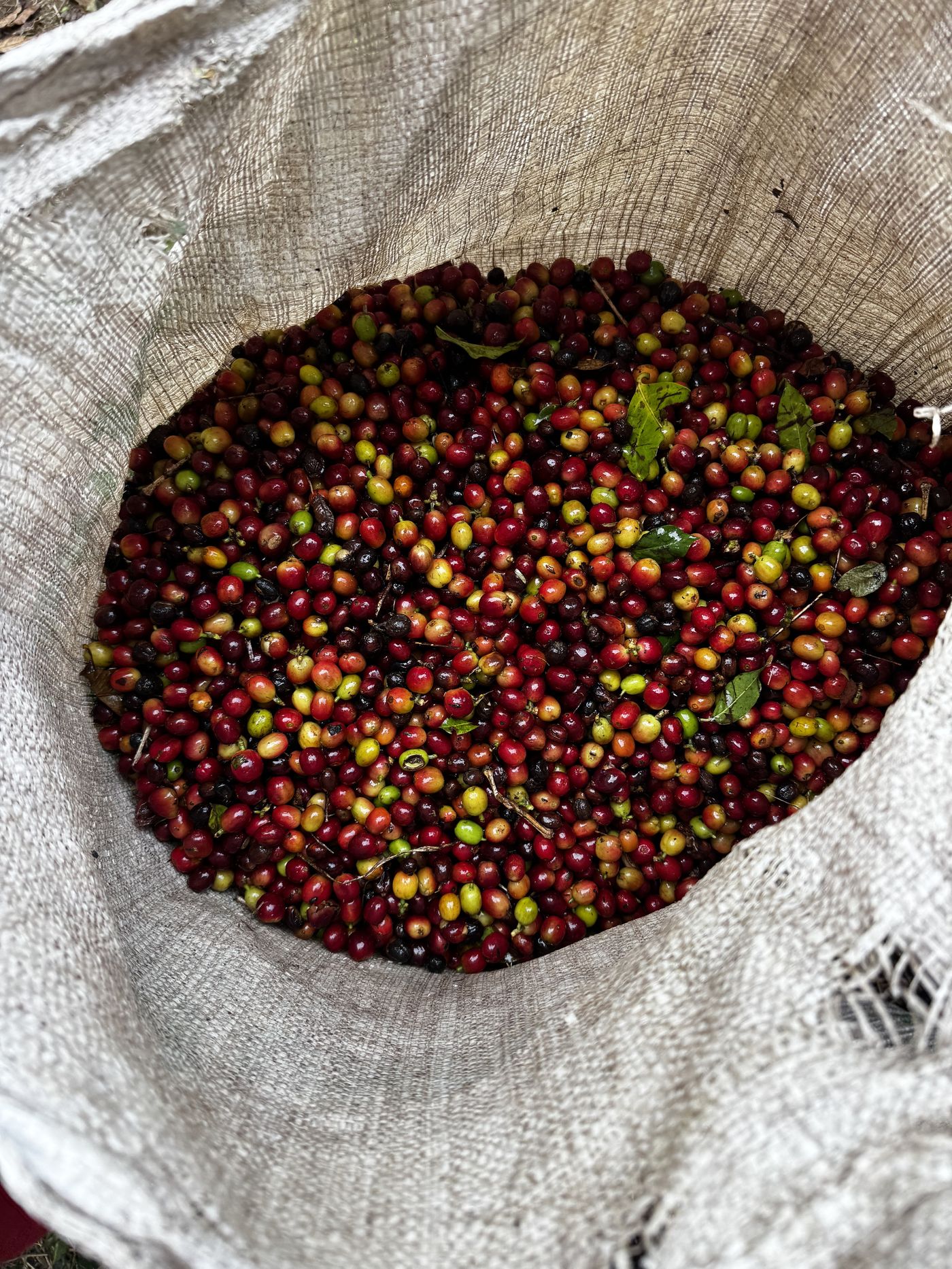
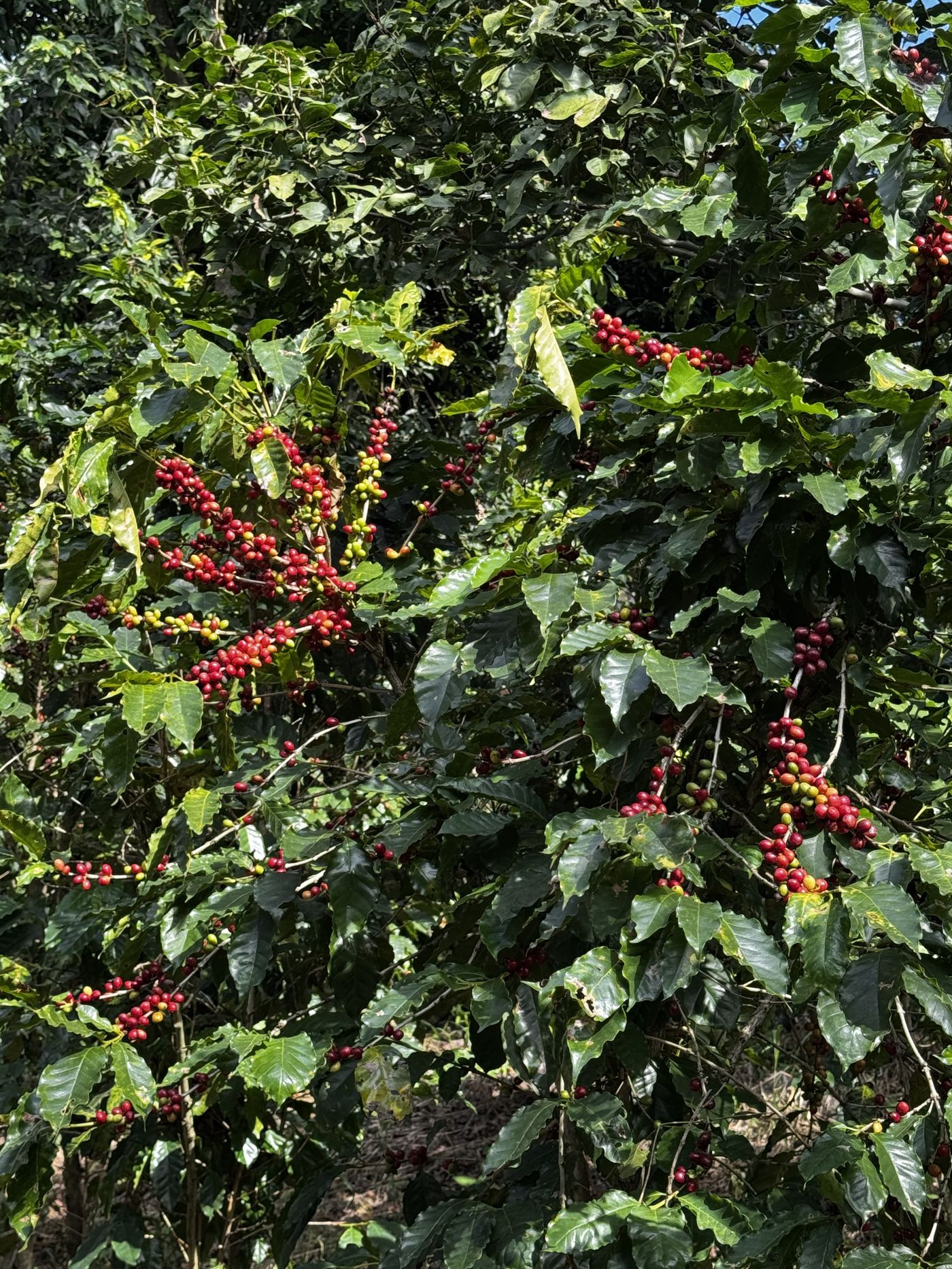
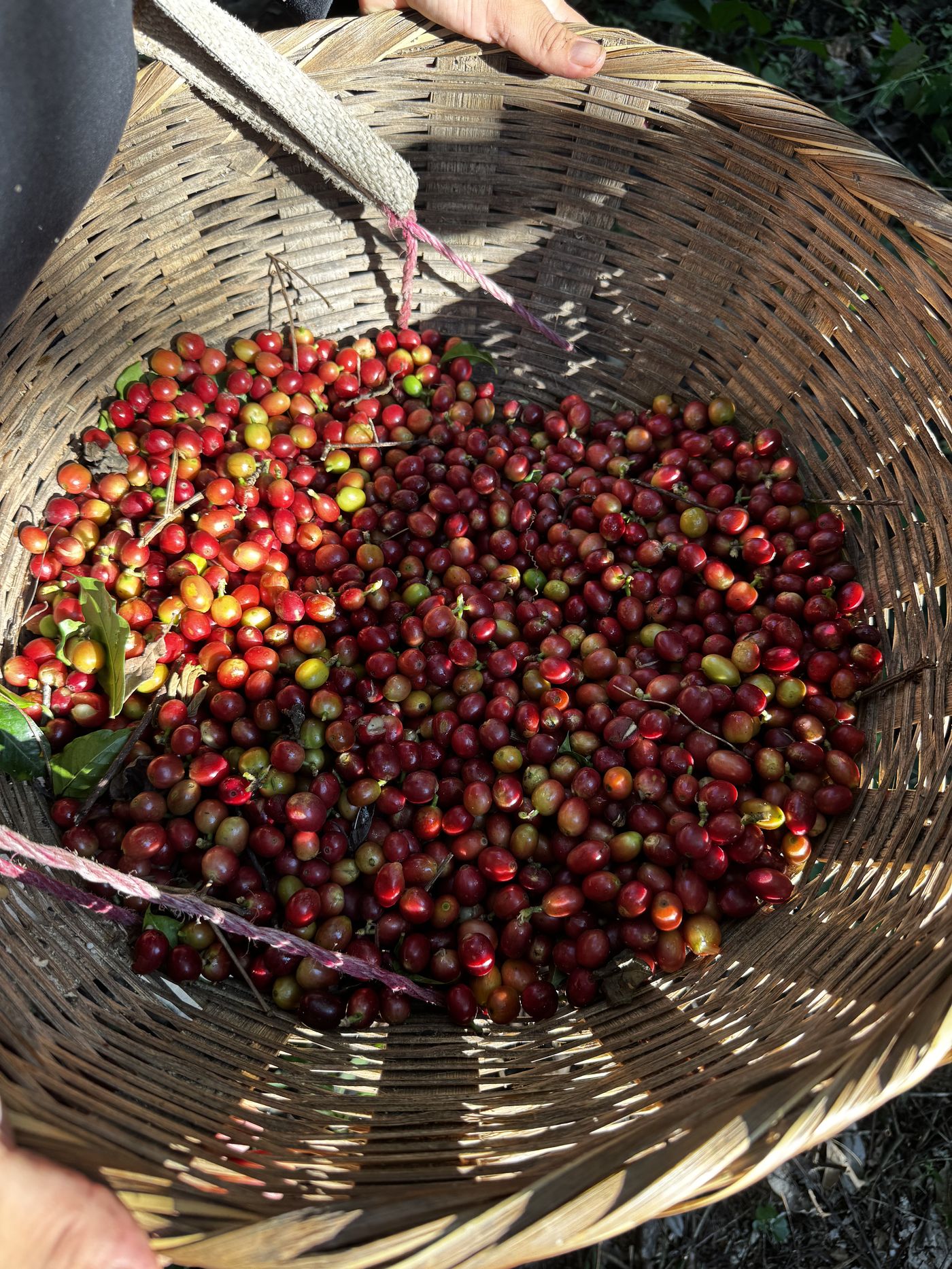
Pacas, Catimor and Icatú cherries ripen slowly in the shade, and slow is the point: more time on the branch means more sweetness in the cup. Pickers pass the same tree several times, taking only what is deep red.
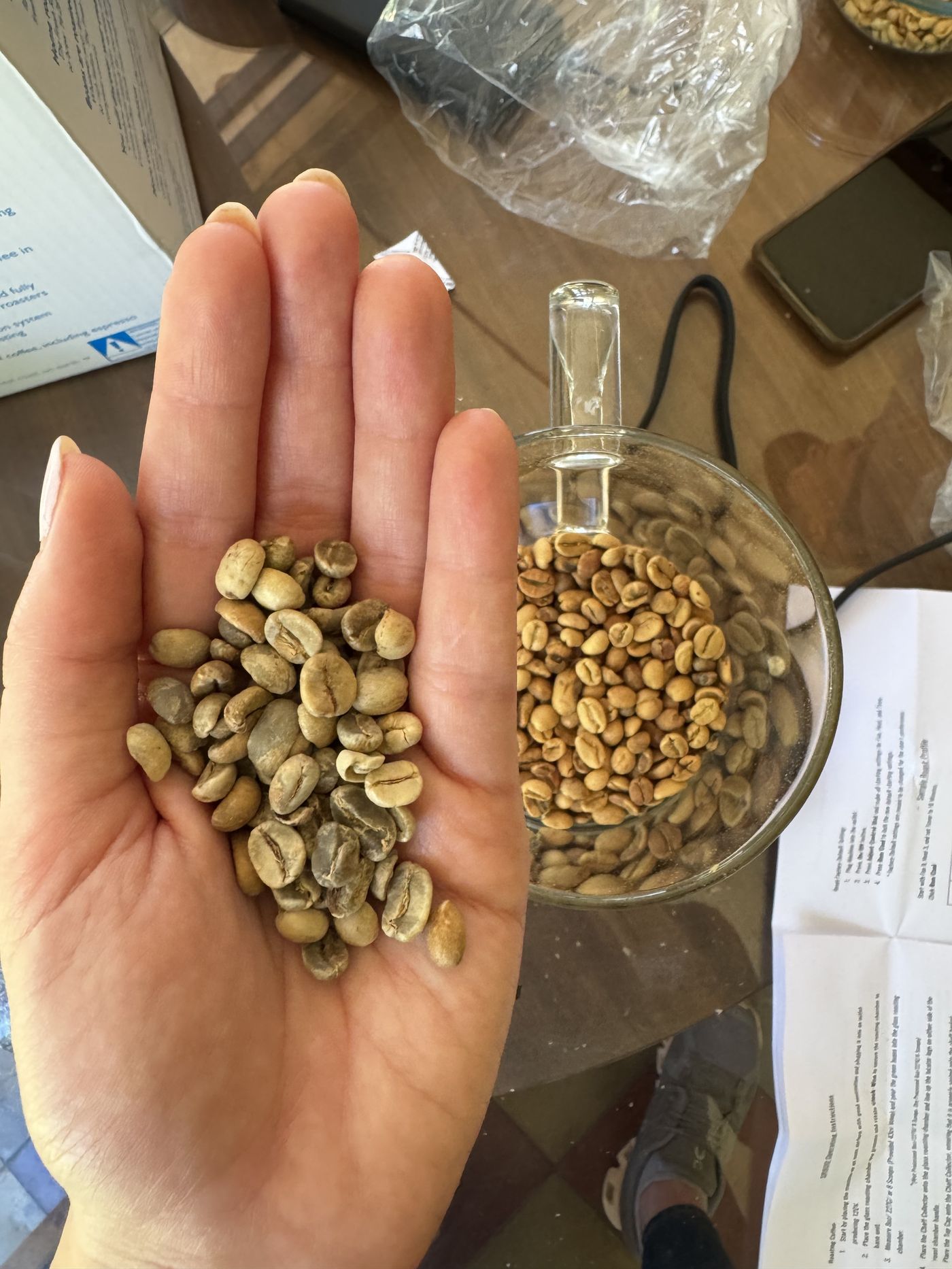
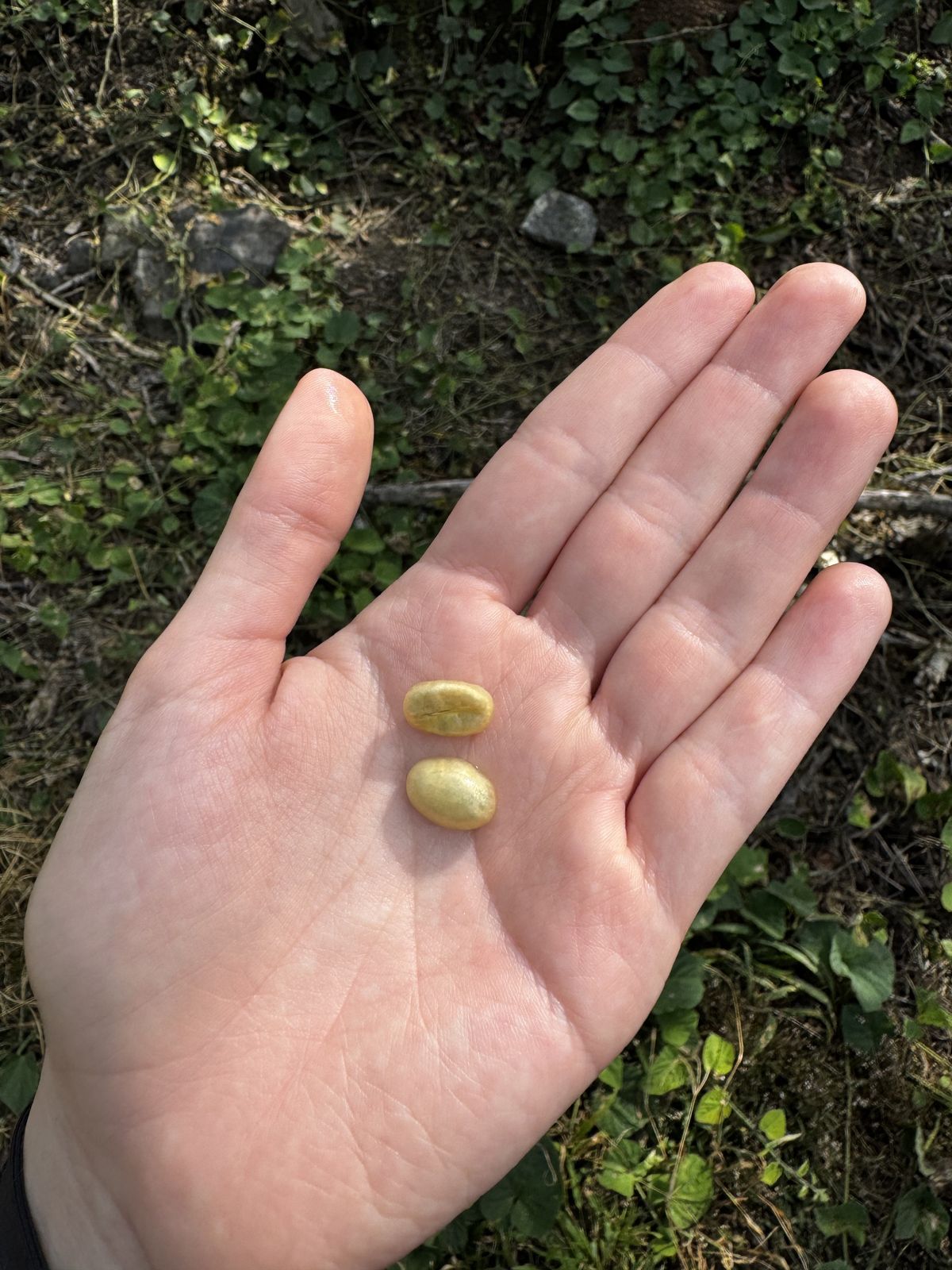
Dense green beans, grown in old volcanic soil at a slow highland pace. From here they go to the mill, the roaster, and finally the cup.
The Harvest
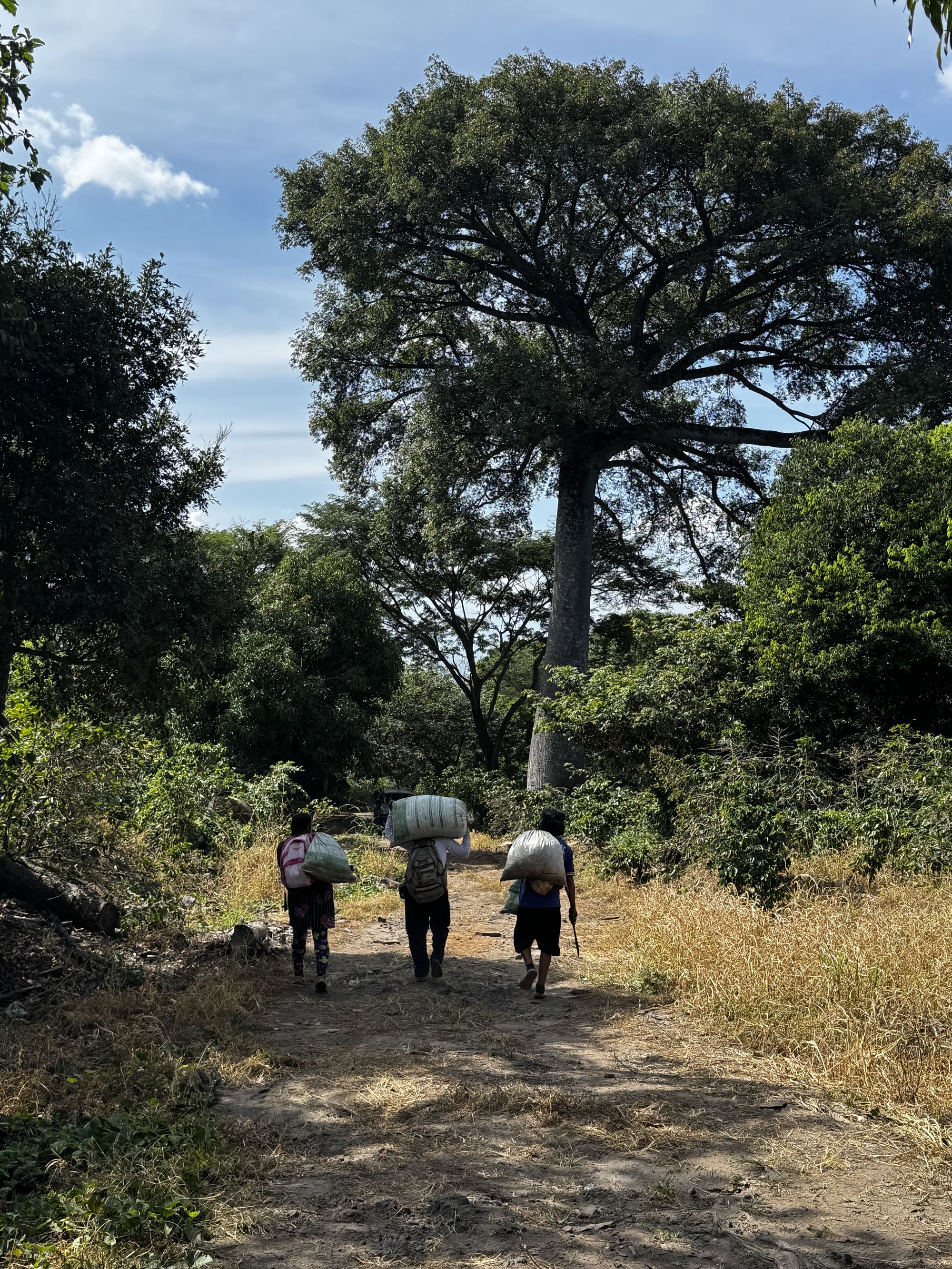
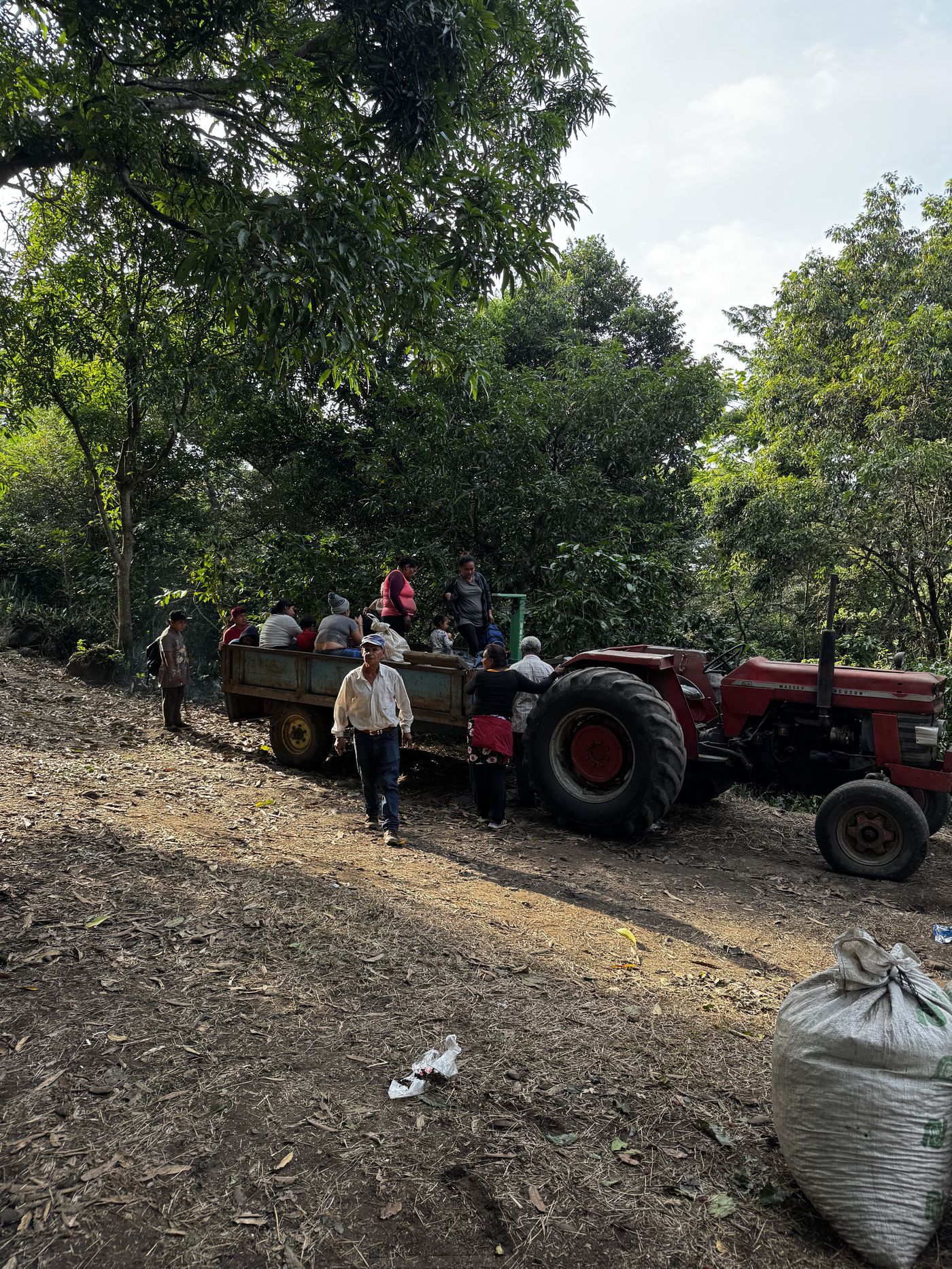
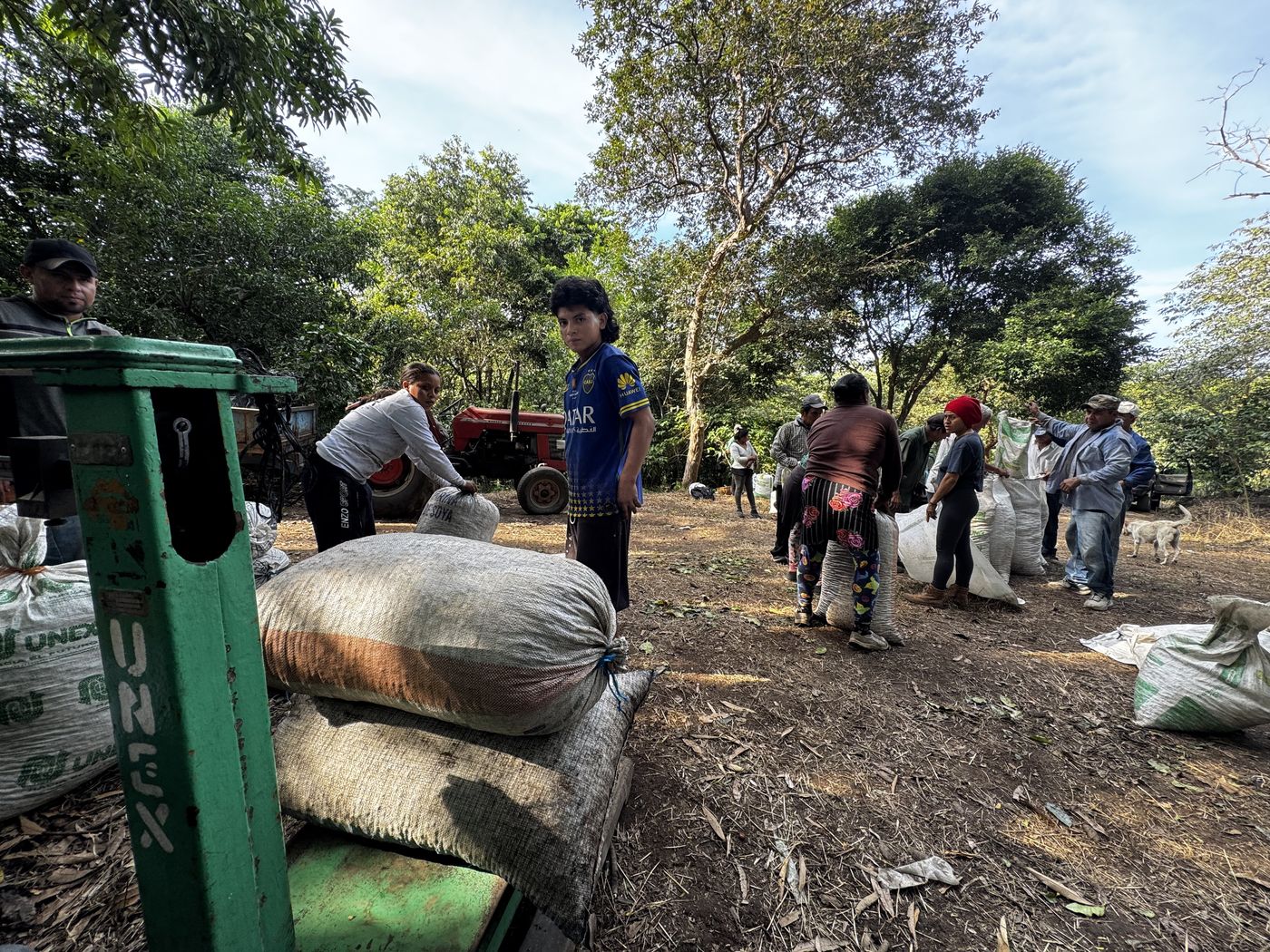
No machines touch this hillside. The harvest runs from November to March, peaking in January and February, and it moves at the speed of careful hands: from tree to basket to scale to town.
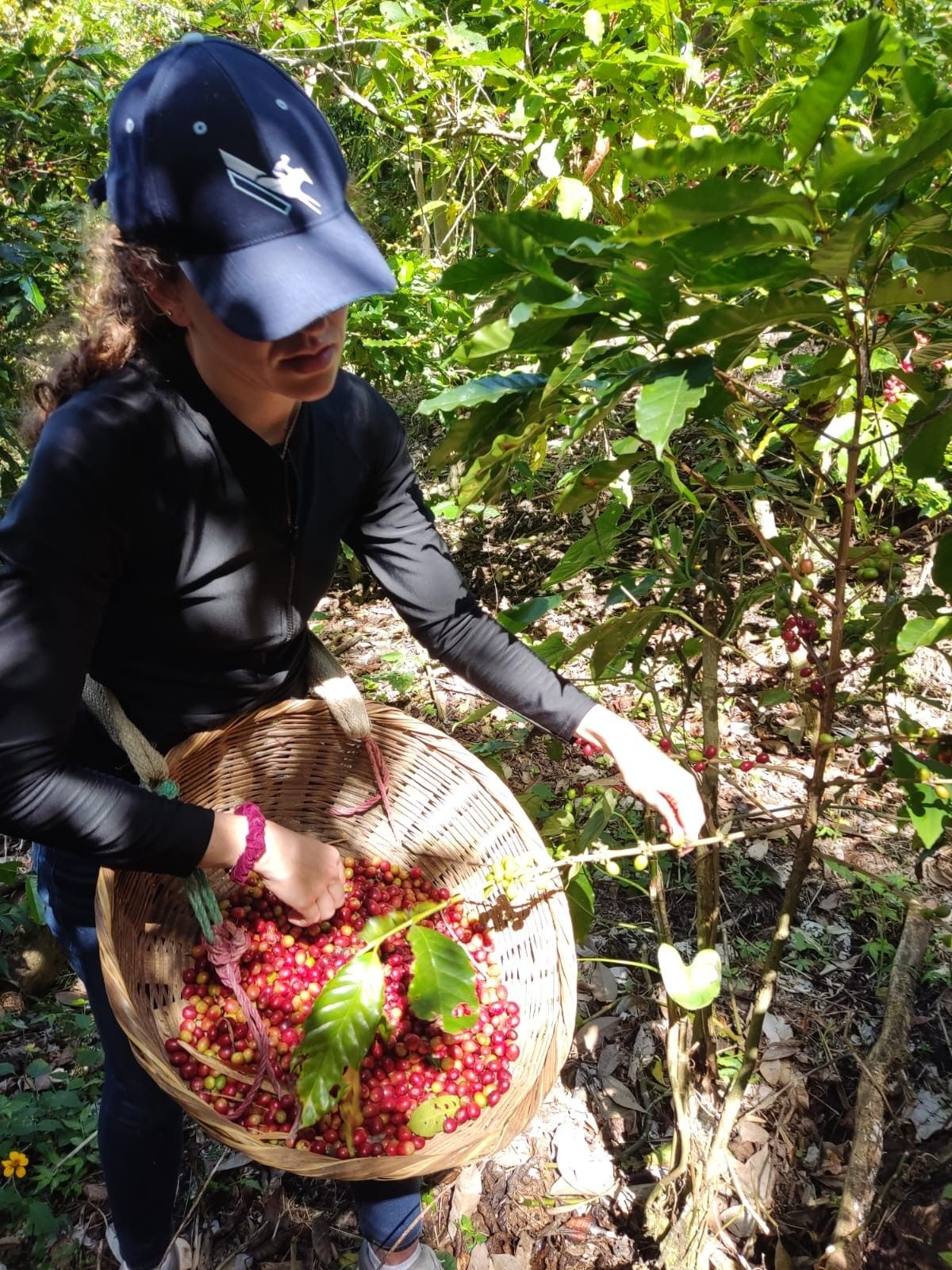
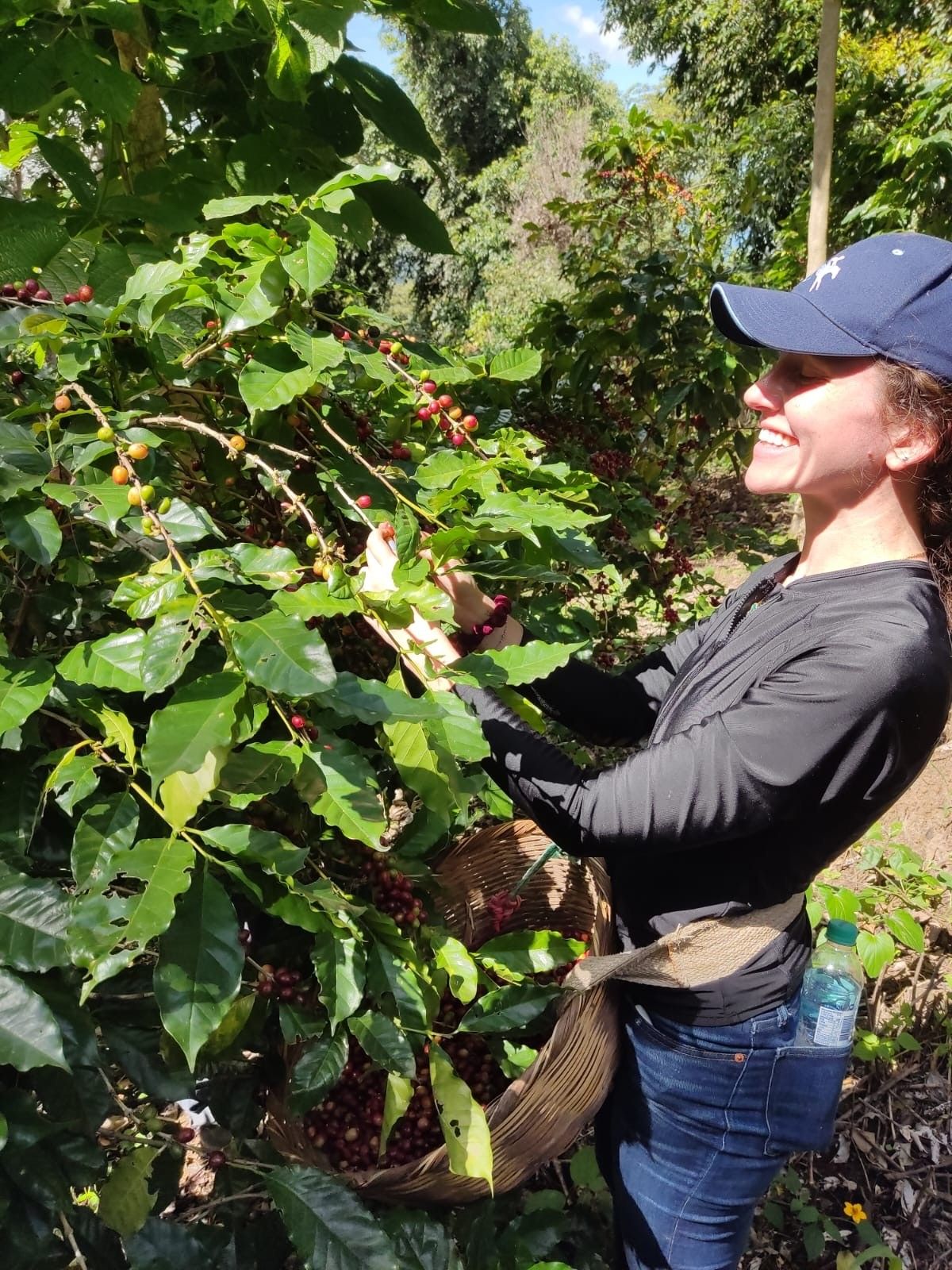
Only the ripe cherries come off the branch. Pickers pass the same tree again and again as the rest ripen.
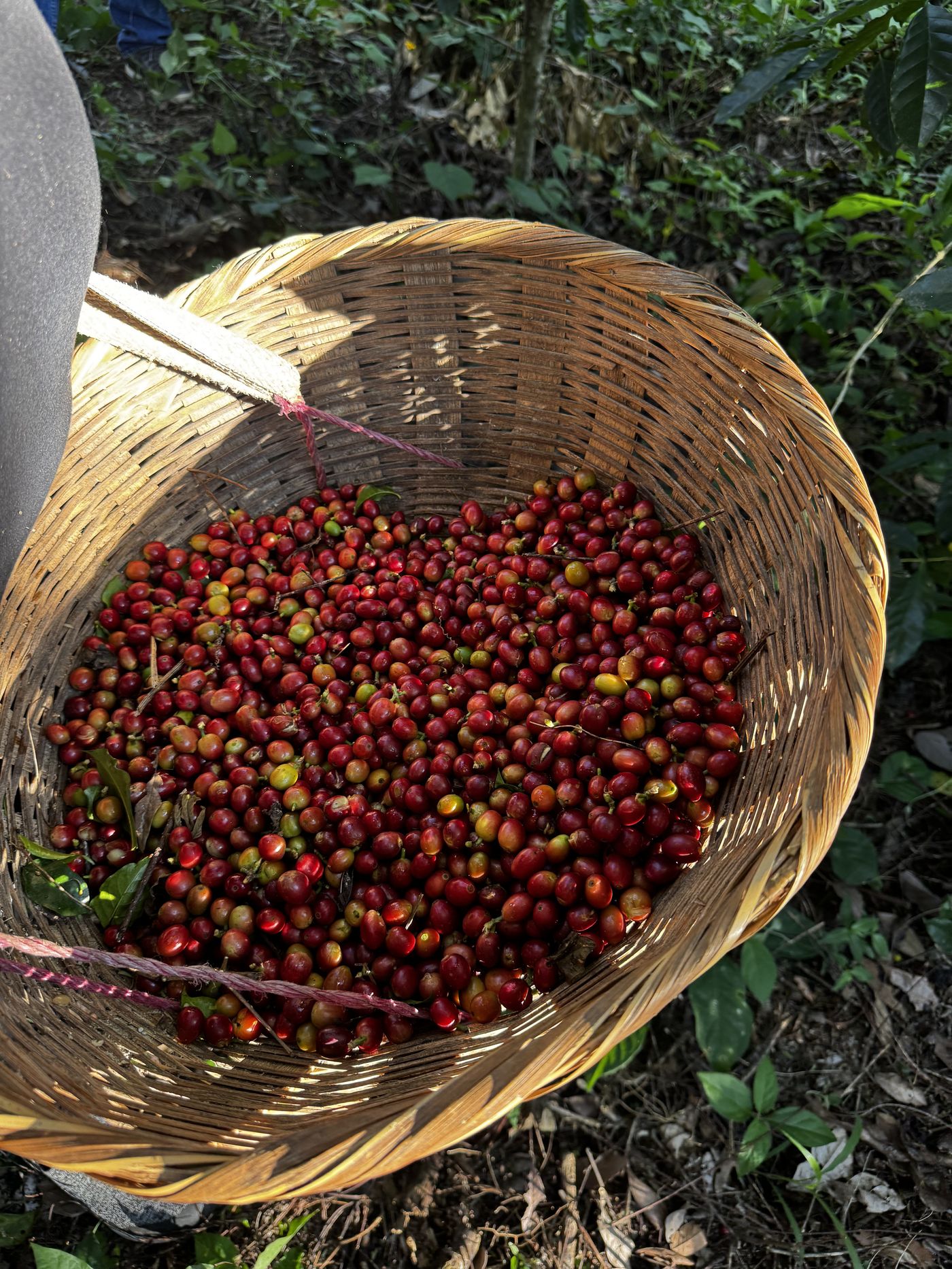
Leaves, stems and underripe fruit are pulled out in the field, so only clean cherry rides to the mill.
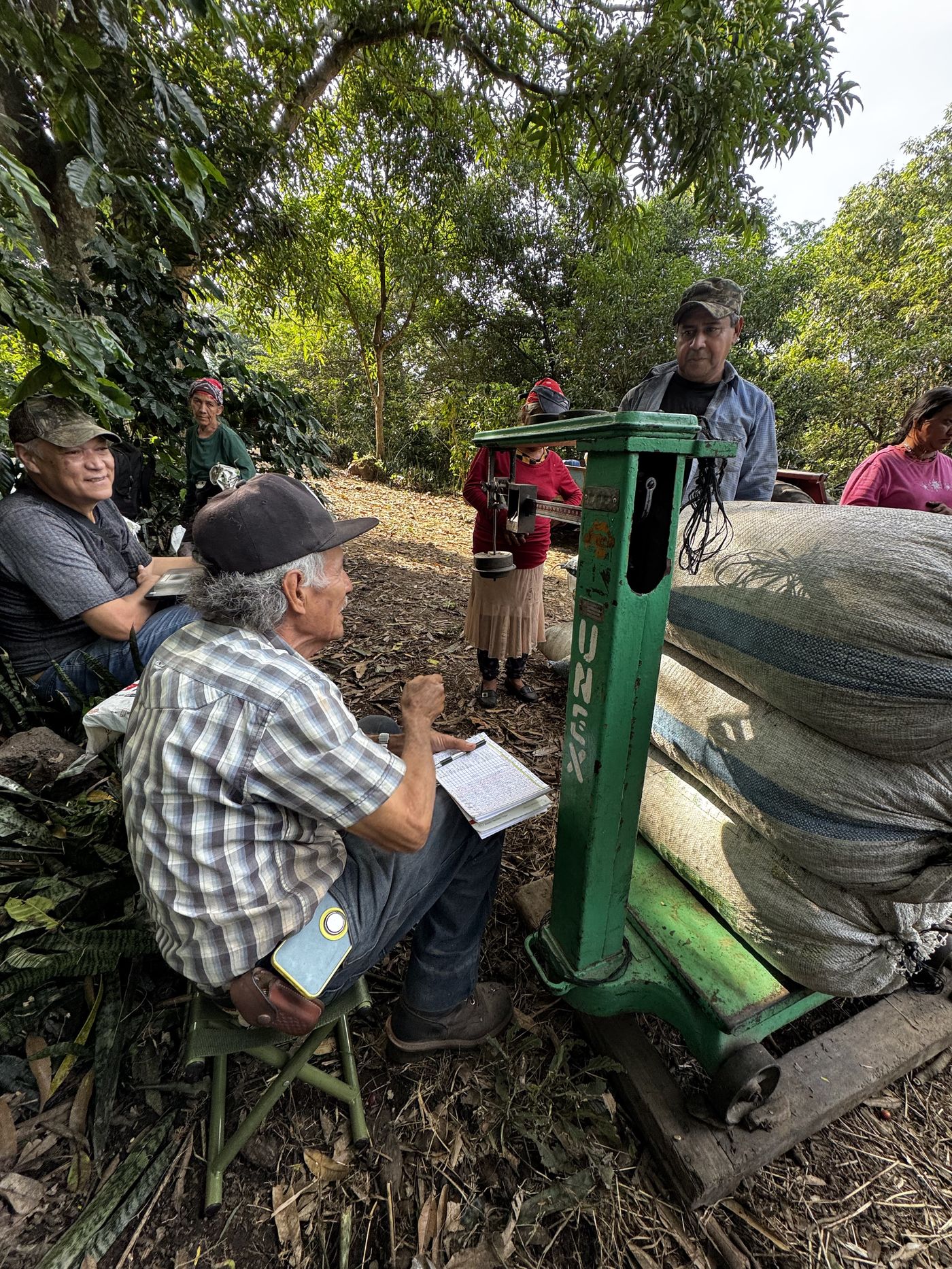
Every picker's harvest is weighed and recorded in the notebook, the old way, sack by sack.
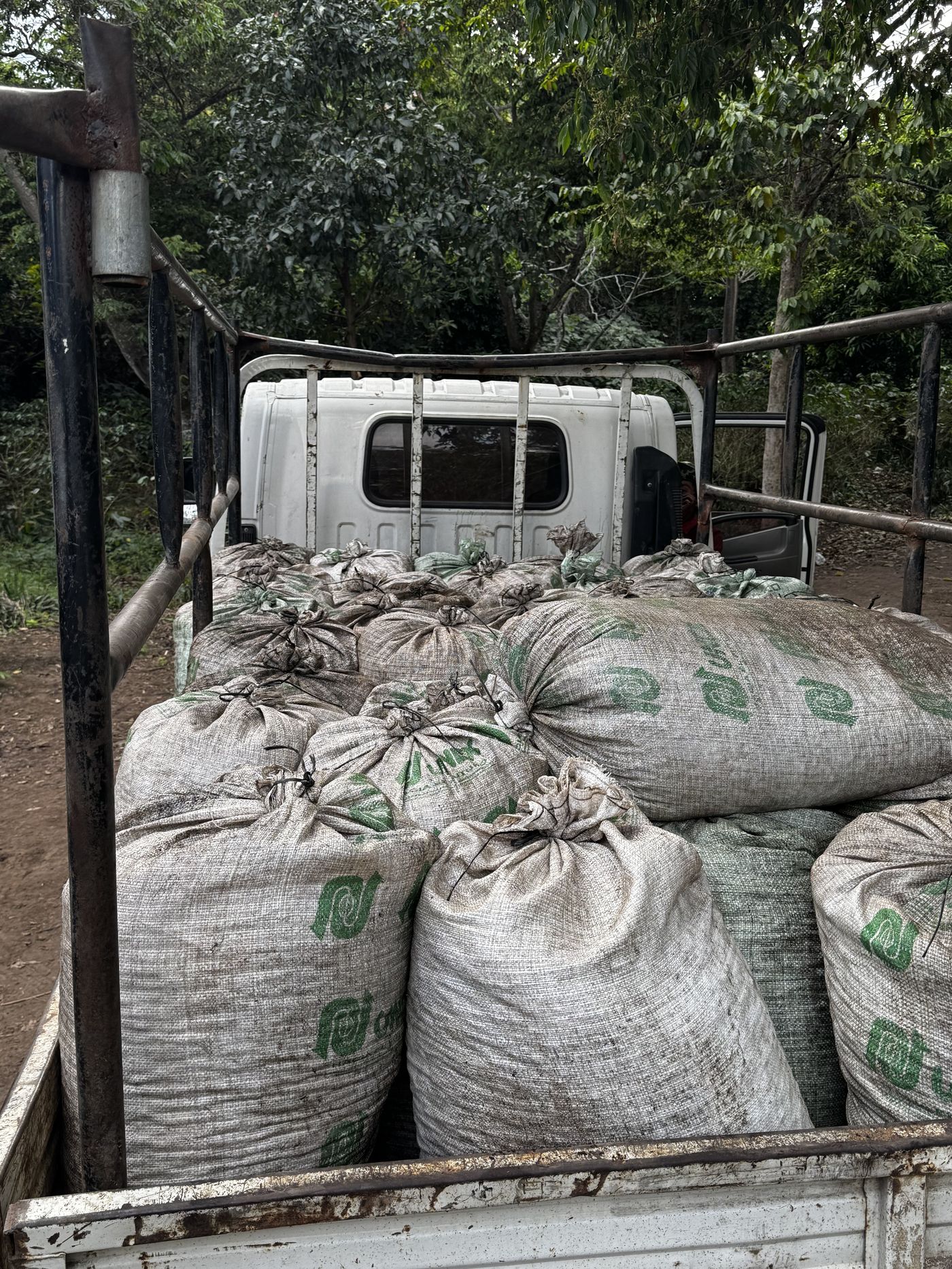
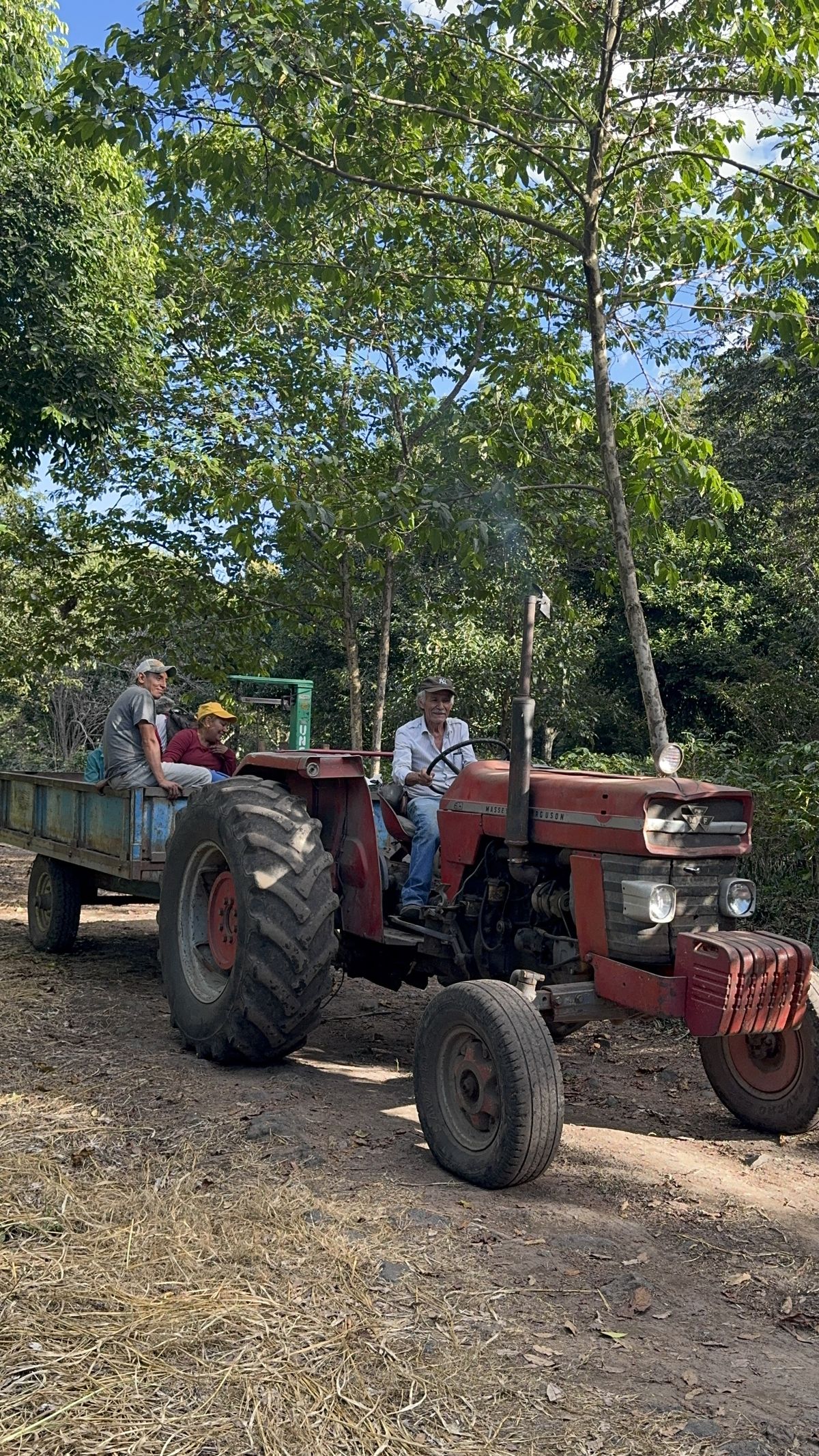
Sacks ride out the same afternoon so the fruit arrives fresh at the mill.
A quintal is 100 pounds. It takes about five pounds of ripe cherry to make one pound of export-ready green coffee, and every one of those pounds was picked by hand.
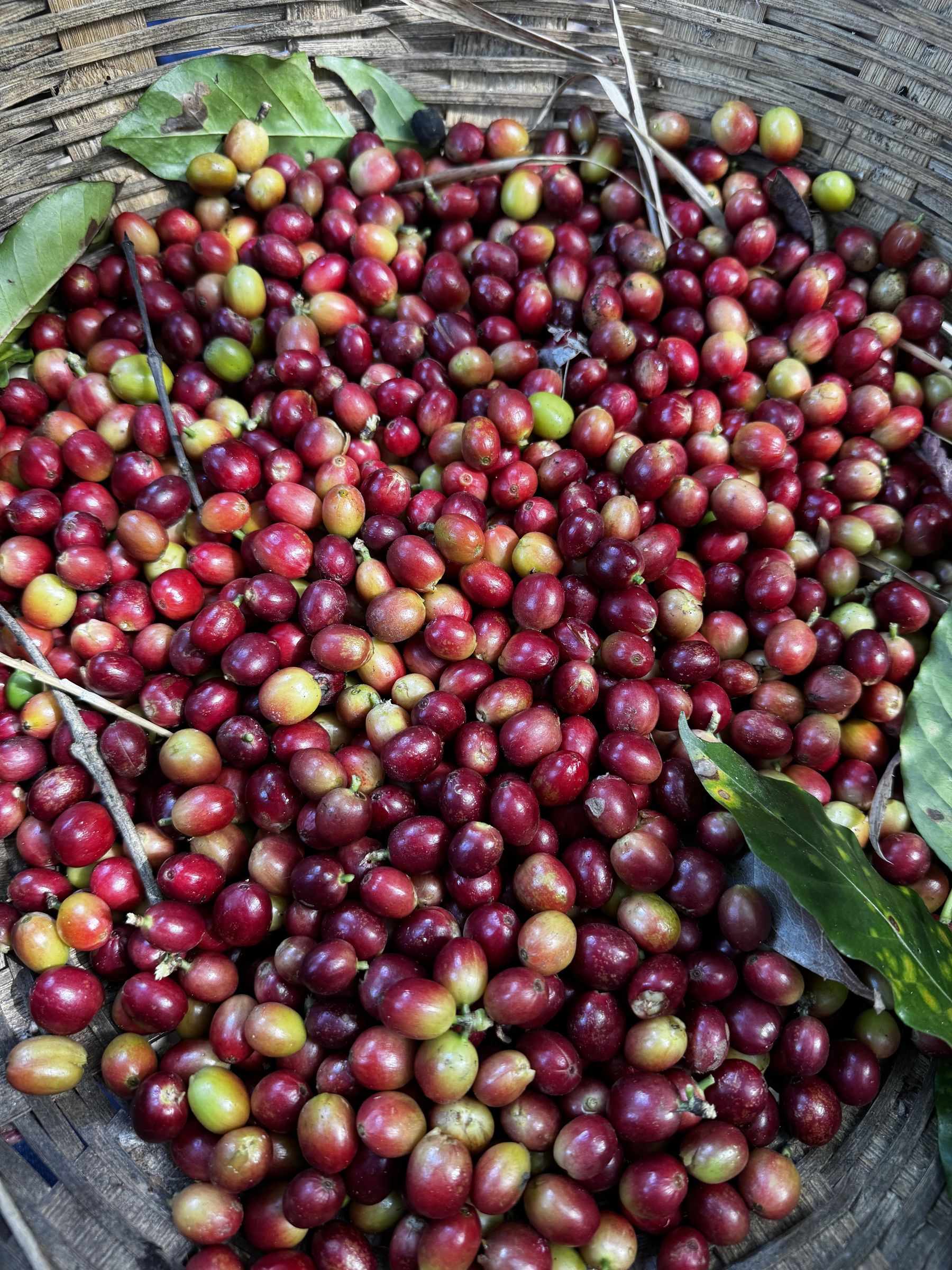
The reward
Beyond Coffee
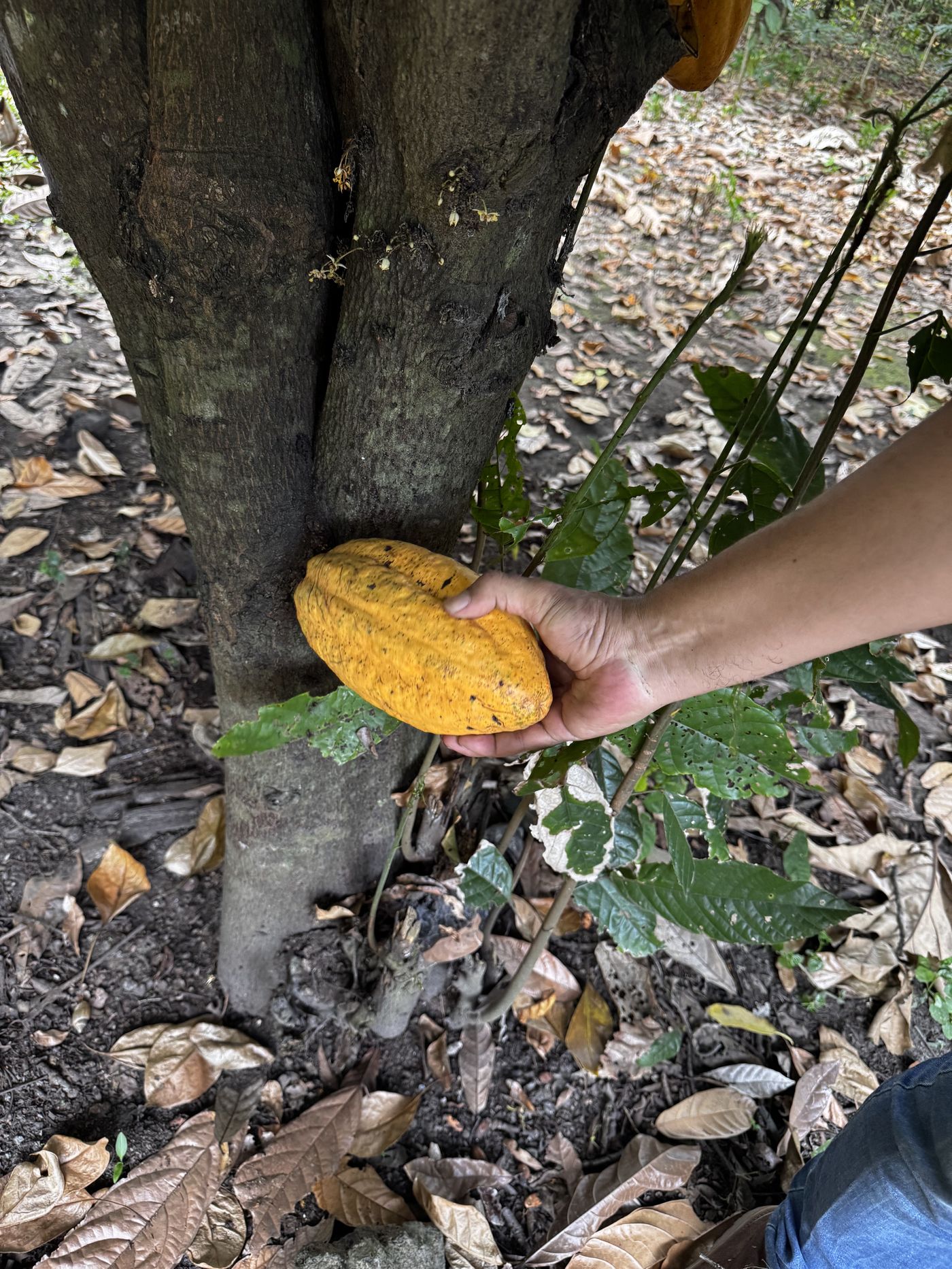
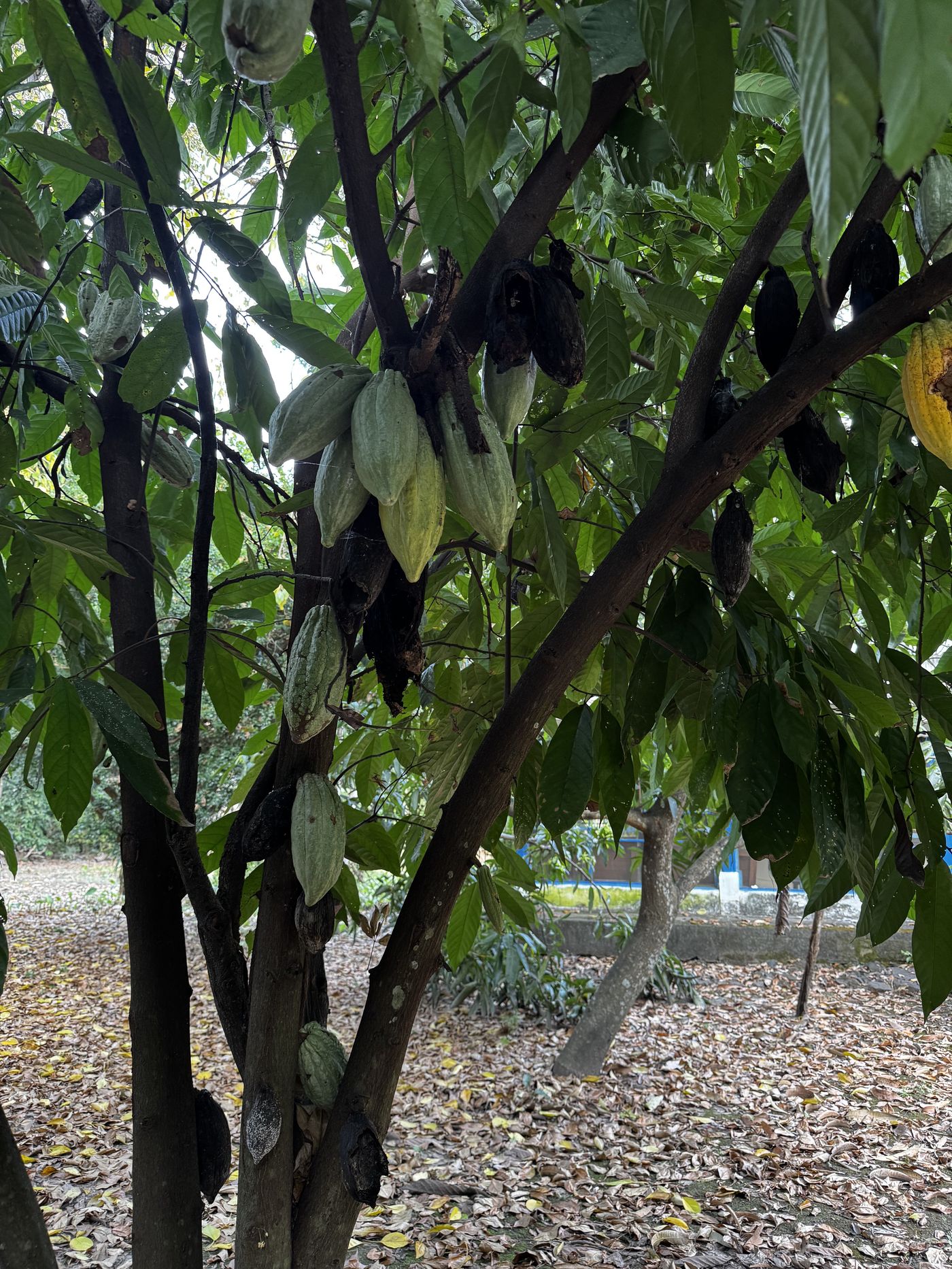
Cacao, plantain, citrus and hardwood share these hills with the coffee, the way Salvadoran farms looked long before monoculture. The mix feeds the families who work here, shelters the soil, and keeps the land alive between harvests.
Caring for old trees means planting new ones. Every year, young coffee goes into the ground and the soil of each tablón is studied and fed, so the next 150 years get the same chance the first 150 had.
The Renewal
A farm that has lasted 150 years plants for the next 150. Season by season, young trees go into the tablones alongside the established Pacas, Catimor and Icatú.
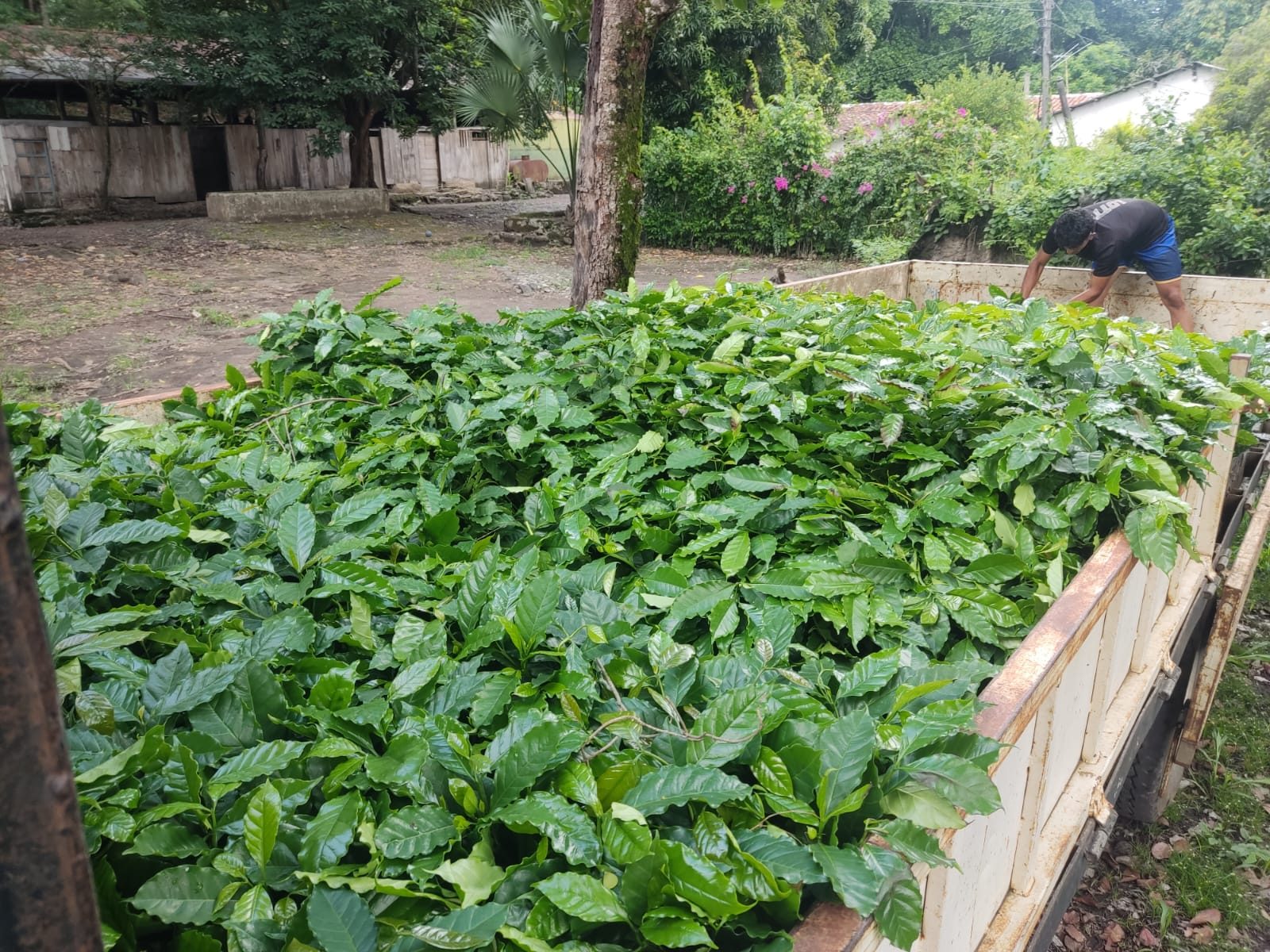
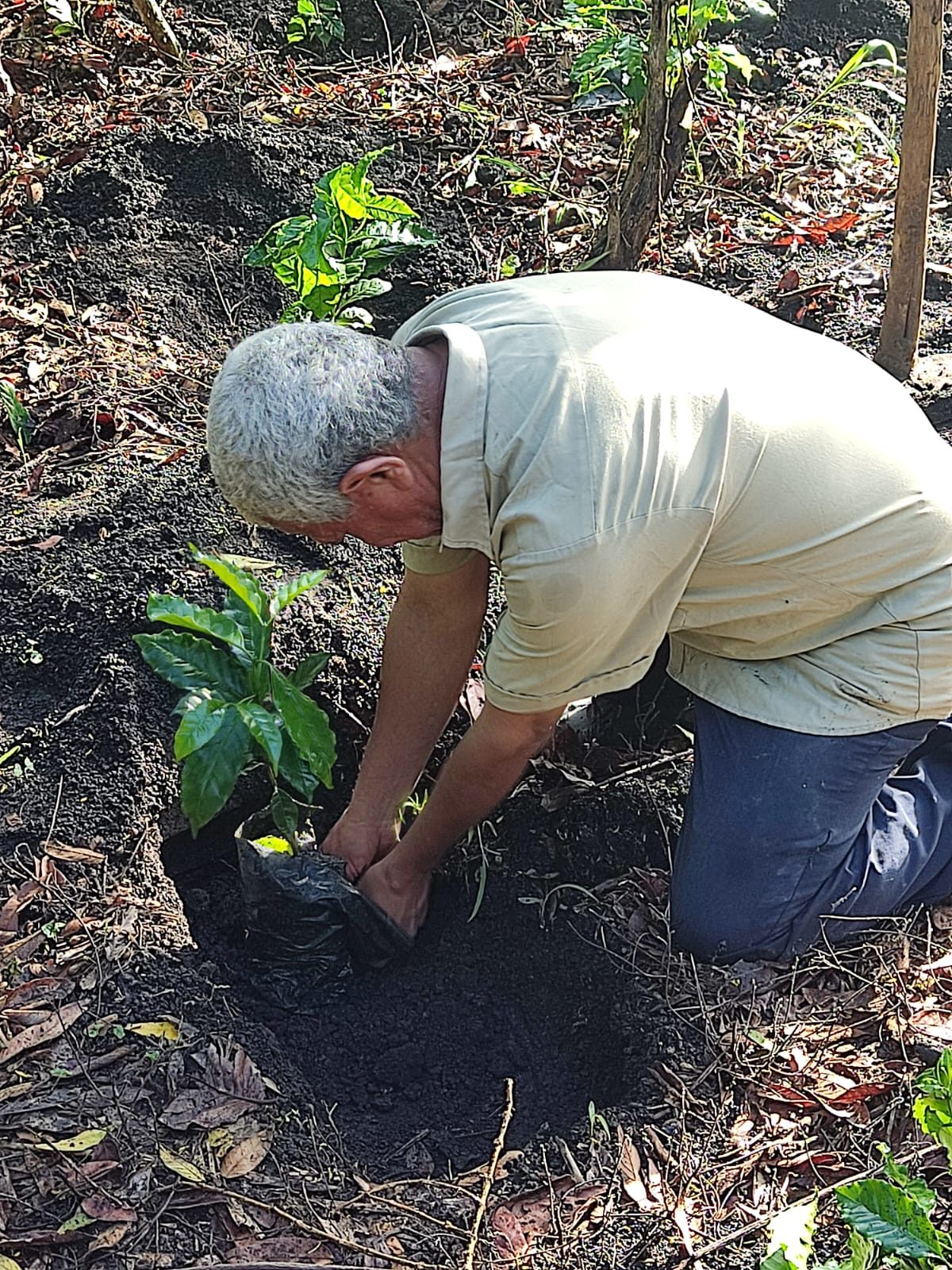
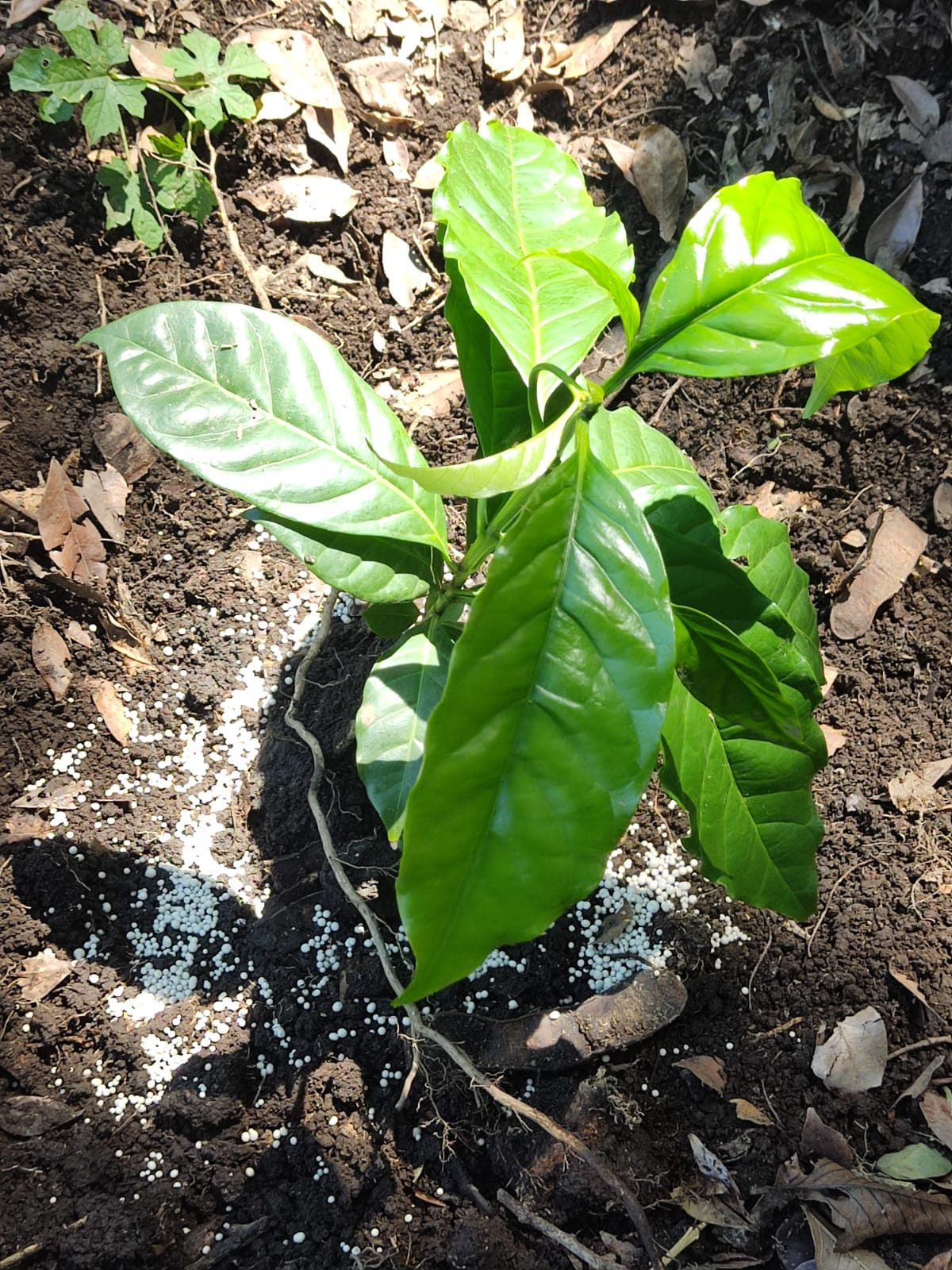
Thousands of seedlings arrive by truck and go into the ground by hand, each one set into a basin of turned soil and fed from its first day.
Gallery
Visit Us
We welcome visitors to the finca in Quezaltepeque, thirty minutes from San Salvador. Walk the tablones under the old shade trees and taste what this land has been growing since 1872. Come between November and March, best of all in January or February, to see the harvest in full swing.
hola@tierra.cafe Find us on Google Maps